Showing posts with label 3a. Show all posts

Chapter 31: A Very Curious Matter


The Grosvenor Hotel, Chester,
when Holmes and Watson were young.
"What was all that about?" I asked when we had settled into our hotel.

"What was all what about?" replied Sherlock Holmes.

"I'm not sure I followed your conversation with Ceri and Chris," I said. "How did you know they were trying to sell their house? And why are the police trying to keep her quiet?"

"According to the London dailies and the international press," said Holmes, "the police were called in by Gareth's colleagues at MI6, who became concerned after not seeing him at work for some time.

"But there have been conflicting reports," he continued. "And according to one of them, it was actually Ceri who called the police. Normally, a sole dissenting report would not attract much of my attention. But that report was published right here, in the Chester Chronicle. Why?

"Some other aspects of that report were very curious. It gave the name of the street where Chris and Ceri live, it gave the name of the hospital where they both work, it stated that their home was for sale, and it even quoted the asking price. Why?

"The article was ostensibly about Ceri's having gone to London to help the police, who were trying to determine where Gareth was and what he was doing in the final days of his life. There didn't seem to be any reason for all the personal details, especially the price of their home, unless --"

Eastgate Clock, Chester
"Somebody was trying to intimidate her?" I asked.

"You might be onto something, my friend," he replied.

"These details may or may not be crucial to the case," he continued, "But they are fascinating nonetheless. The question of whether or not it was Ceri who phoned the police hardly seems to bear on the matter of who killed Gareth. But it may be very important.

"How long does it take for a body to reach 'an advanced state of decomposition?' How long was Gareth missing from work? Why weren't the police called sooner? And, perhaps most telling: Why were the police called at all? Wouldn't MI6 normally look into any instance of one of their own who was missing from work? And wouldn't they do that immediately?"

"If Ceri has information that would contradict the official story," I said, "and if the contradictions would be so uncomfortable that the police find it necessary to intimidate her, that may tell us something in itself."

"Maybe," said Holmes. "It is also possible that we are reading this incorrectly. Ceri was in a very fragile mental state immediately after learning of the death of her brother. The police can be a little bit callous; after all, they see horrific scenes on a regular basis. It is normal for witnesses, or potential witnesses, to be told not to speak of what they know, while the legal process is underway. And it is not unknown for a zealous reporter at a small paper to write up every detail he can find, even though some of those details are quite irrelevant to his story.

"Put all these factors together. Ceri is distraught, the police in London tell her not to talk, then she returns home and finds gobs of personal information about her husband and herself in the local paper. Who wouldn't be intimidated?

"But was that the point? Were the details about their house being for sale intended to provide a pretext for unscrupulous characters to gain access to their home? We may never know. But it won't hurt them to be careful."

The Grosvenor Hotel today
"If you are right about this," I began, "and if there are elements within both the police force and the Chester Chronicle who are trying to keep Ceri quiet to suppress her knowledge, then I don't understand why her dissenting statement was published at all."

"It is a very curious matter, Watson," my friend replied, "one of many exceedingly odd aspects of this very bizarre case."

"It seems almost too bizarre to be solved," I suggested.

"On the contrary, my friend," the great detective replied, "it is almost too bizarre not to be solved. All these curious details are trying to speak to us, Watson. What are they saying?"

"I can't imagine how we could ever find out," I admitted.

"I don't know yet, myself," said Holmes, "although I do have my suspicions. But do not despair. We are scheduled to meet Buckingham Slate tomorrow evening, and unless I am very much mistaken, we will be in a far better position after that meeting than we are now."

Next: Impossible

Chapter 32: Impossible


"Just before lunch, as you may recall," said Sherlock Holmes, "I mentioned a piece that ran in this morning's Independent. It presents some new details which may not matter much in the long run, or which may turn out to be extremely significant.

"It is still too soon to know what might be important," he said, "or whom to believe. And yet..."

"What is it, Holmes?"

"I was about to say: it is not too soon to know whom to disbelieve!"

"Tell me more," I said.

"To the best of my knowledge," Holmes continued, "the Independent has made the first published claim as to the position of the body within the bag."

"What does it say?" I asked.

Holmes, finding his place in the paper, spoke slowly and clearly. "According to David Randall, when police entered Gareth Williams' home,"
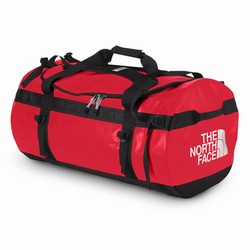
His flat seemed undisturbed and unoccupied, but in the bath they found a red, outsized, zipped and padlocked North Face holdall. Inside were the decaying remains of Mr Williams. His body (he was 5ft 8in tall) was naked, curled up tightly, with his arms and legs contorted behind him.
"Curled up tightly, with his legs behind him? But that's impossible!" I objected.

"So it would seem," said the detective, "unless Gareth Williams was the most remarkable contortionist who ever lived."

"Can we safely assume he wasn't?" I inquired.

"If he could curl up tightly with his legs behind him," said Holmes, "he wouldn't have had to work for MI6. He could have toured with a circus!"

"Surely you jest," I replied.

"But only to point out the absurdity of the situation," Holmes continued. "Even if he could stretch his body into such a position, it would be a stretch. No one in his right mind would ever describe it as 'curled up tightly.' And yet, if we take David Randall at face value, this is exactly what we are supposed to believe."

"Is it just a slip?" I suggested.

"Either it was written that way and approved by an editor," Holmes replied, "or it was written differently and changed by an editor. It's their paper. We have to assume it says what they want it to say.

"This is, or would be, 'ground-breaking' reporting on a major national story," he continued, "if it were even slightly credible. But it isn't. So what is it?"

"I was hoping you might tell me," I said.

"The position of the body within the bag could give us vital clues as to the sequence of events," said Holmes. "We still don't know whether Gareth Williams died in the bag, or whether he died elsewhere and was placed in the bag later. All we can do at this point is guess.

"If we had seen the body in the bag," he continued, "we would be able to make an educated guess. If we had an accurate description, we could draw some reasonable inferences. If we had an inaccurate, but plausible, description, we might be led to form mistaken conclusions. But instead we have something quite different.

"Some of the facts are obvious: By burying an impossible claim in the middle of an important story without so much as an attribution to 'an anonymous source,' David Randall and the Independent show how much intelligence they expect from their readers.

"And perhaps, to most readers, the small details don't matter very much. But to us they are essential. And we now have a confusing mental image of an impossible situation, which can only serve -- despite our best efforts -- to obscure the truth of the matter."

"Do you think that was the purpose of it?" I asked.

"Can you think of any other purpose?" he replied.

Holmes paused as if expecting a reply, but I couldn't think of anything to say. Finally I shook my head and my friend continued, "It may be that it's meant not only to obscure the truth, but also to impede clear thinking on the subject."

"If the aim was to impede clear thinking," I said, "it appears to be succeeding with me."

"It's been a long day," said Holmes. "Get some sleep. Tomorrow will bring us more complications to sort out, and we'll need to think as clearly as possible."

Chapter 33: The Body In The Bag

Previous: Impossible

The bag in which Gareth Williams' body was found
was 32 inches long with a capacity of 140 litres.
"Wake up, Watson!" said Sherlock Holmes, shaking me by the shoulder. "Wake up, man!"

"What is it, Holmes?" I asked groggily.

"You've slept late again. We need to catch a train and get back to London," he said. "I've got some breakfast for you, but I need you to get moving."

I sat up, rubbed my eyes, and started to regain my bearings. We were in a hotel in Chester, on our way home from Wales, and it was a Monday morning.

Holmes gestured toward the table upon which a tray of breakfast awaited me. A second tray, empty, showed me that he had already eaten.

"I'm sorry, Holmes," I said. "I've had terrible trouble falling asleep lately. And then, when I do finally doze off, I am awoken by the most horrible dreams."

"Dreams pertaining to this case?" he asked.

"Oh yes," I said.

"Dreams of Gareth Williams in the bag?"

"Why, yes, indeed. How did you guess?"

"With his 'arms and legs contorted behind him?'"

"That's the strangest part, Holmes. I know it can't be, and yet my mind's eye keeps trying to see it that way."

"That's the power of the lie, Watson," he replied. "Before yesterday, did you have any clear image of the body in the bag?"

"I can't say I did," I answered. "It was all too horrible to contemplate, and my impressions were very fuzzy. Now it seems even more horrible, but my impressions are actually even fuzzier."

"Then let's try to be clear about it," said the detective. "Gareth Williams was five feet eight inches tall. That's 68 inches. The bag is 32 inches long, slightly less than half his height.

"The distance from his hips to the top of his head would have been roughly the same as the length of the bag. We wouldn't expect his torso to be bent in half. Therefore he must have been bent at the hips. Which way do people's hips bend?"

"Forward!" I said. "His knees must have been brought up to his chest."

"Or very nearly so," replied my friend. "Most likely his knees were bent. If they were straight, his feet would have extended beyond his head, and we have already accounted for the entire length of the bag."

"So you think he was on his back?" I asked.

"I would think so," he responded. "If he was dead, or incapacitated, when he was put into the bag, it would make sense to put the torso in first, then the legs.

"And if he went into the bag alive and well --"

"I shudder to think," said I.

"I know you do," said he. "But let's be clear. If by some chance he went into the bag alive and well, how could that have happened?"

"If that is what happened," I said, "some trickery must have been involved. Was he lured into the bag somehow?"

"Let's suppose he was," said Holmes. "If so, did he step into the bag, bend over and tuck himself in, and then have someone close the bag behind him? I find that most unlikely, even in this very unlikely scenario.

"If he entered the bag of his own volition, thinking that he could let himself out at any time, he would have wanted to be on his back, so he could see the zipper, so he could unzip the bag when he was ready to emerge.

"According to this line of thought," Holmes continued, "the padlock was a surprise, and a nasty one."

"Do you really think somebody tricked him into the bag," I asked, "and then locked him in?"

"I don't know what to think," Holmes replied. "At the moment, we are merely exploring a hypothetical line of thought. And I am suggesting that if he climbed into the bag voluntarily, he would have wanted to be on his back."

"So you think he was on his back, in any case?" I asked.

"I think it very likely," said Holmes.

"With his knees tucked tight to his chest?"

"Probably."

"And his arms? Could his arms really have been 'contorted behind him?'"

"If they were," said Holmes, "it wasn't because he was trying to free himself from the bag. If he was on his back and his arms were 'behind' him, then they were actually 'under' him, which would suggest that they may have been tied there."

"You think so?" I asked, gasping at the implications.

"How else could they get there? Did he wiggle around in the bag until he got his arms under his torso? Or was he placed in the bag in that position? If so, how? And why?

"We're speculating, but let's speculate as clearly as possible. He was probably on his back, no matter how he came into the bag. His hips were bent -- forward. His knees were probably bent as well. And his arms, unless they were tied behind his back, were probably in front of him, at his chest.

"If we happen to hear something different, something plausible, from a reliable source, then we may learn something about the nature and the cause of his death."

"And if we hear something implausible?" I asked. "From an official source, or from no source at all?"

"Well, that would tell us something about the nature of the investigation, or the nature of modern journalism, or both," said Holmes.

"Come on," he continued. "Get washed, get dressed, eat some breakfast, put all the fuzzy thoughts behind you, and let's get moving. How soon can you be ready?"

"Do we have forty-five minutes?" I asked.

"I was prepared to give you an hour," said Holmes, picking up a newspaper."There's a train in ninety minutes. If we catch it, we can have dinner in London before our meeting with Buckingham Slate. Otherwise we eat on the train."

"If you put it that way," I said, "I'll be ready in twenty minutes!"

Chapter 34: Other Mysterious Couples


Gareth Williams reportedly met
a mysterious couple at a pastry shop
near the Holland Park tube station.
Sherlock Holmes fell quiet as our train left Chester, and from the look on his face I judged it best not to intrude on his silence. So I left him to his thoughts and sat back to watch the scenery roll by.

From time to time my friend would emit a low-pitched moan, or so it seemed to me. I wondered whether he was in pain, and I turned slightly in my seat to keep a corner of my eye on him, even while continuing to look out the window.

Quite some time passed before I realized that he was not moaning at all. He was singing to himself, so deep in thought that an occasional snippet of melody would escape his lips. And as more time passed, I began to recognize the tune.

It was deep and dark, slow and sombre, and brought to mind several occasions when I had seen Holmes in a similar mood and heard him sing a similar song. Long experience told me that this particular frame of mind, accompanied by such a haunting melody, was likely a portent of imminent grief -- for his quarry.

But who or what was his quarry? I tried to imagine the mental processes taking place behind the expressionless face of the great detective. But I found the capacity for hard, cold, logical thought to be most elusive. My mind was still overwhelmed by visions and sensations. I could almost see the body decomposing in the padlocked bag. I could almost hear the bereaved family weeping at the funeral. But I could not find anything resembling a handle, or a window. With nothing to hold onto, and no opportunity to look inside, I felt myself beginning to lose hope that the mystery could ever be solved.

So we rode along in near-silence. As I listened to the clackety-clack of the wheels and the occasional sombre note from my friend, I hoped that he was making progress in ways I was unable to observe.

We were nearly halfway to London before my companion spoke. "It's too soon to tell whether Slate will be a good source of information for us," he said, "but it is possible that he might provide us all the clues we need to break this case wide open."

"Do you really think so, Holmes?" I asked.

"It's possible," he replied. "It's also possible that we will get nothing of value from him whatsoever. But I do like our chances."

"I'm glad to hear that," I answered, "because I've been starting to think --"

"Yes, I know," said my friend. "I've been seeing it in your face. But it's too soon to worry. We've barely scratched the surface, and already we've uncovered some very useful material. Several promising avenues of investigation remain open -- dare I say 'untouched?' Perhaps Slate can help us to prioritize them.

"I'm especially interested," Holmes continued, "in what he can tell us about the mysterious couples in this case."

"Couples, plural?" I replied. "I'm aware of one mysterious couple, who are supposedly of Mediterranean appearance. Is there another couple attracting your interest?"

"No," said my companion. "There are two such couples. Both have appeared briefly in the news reports, and one or the other could have a significant bearing on our investigation."

"I read your entire file of clippings in one sitting," I said, "and we have been on the move ever since. But I am still ashamed to admit that I cannot remember anything about any couple other than the Mediterraneans."

"There's no shame in it," replied Holmes. "This is my area of expertise, not yours. If you gave me a stack of medical journals to read, and quizzed me on them afterward, you would probably find that I had missed many of the details which you had caught."

I couldn't tell whether Holmes was serious or simply humouring me. His memory is so exceptional that I had trouble imagining him forgetting any details at all. But I smiled and nodded, as if in agreement, and he continued.

"There's a French-style cafe near the Holland Park underground station which Gareth Williams used to frequent, 'Patisserie Valerie' by name. It's been reported that according to waiters who worked there, Gareth came in a few times a week, ordered a coffee, took it to a table at the back of the room, and sipped it slowly. While he was doing this, a young man and woman -- not the couple described as Mediterranean -- would come in, order nothing, make their way to Gareth's table, and talk to him for a few minutes. Oddly, even though the same scenario was played out repeatedly, they always seemed surprised to see him. According to the reports, the mysterious young couple never sat down at Gareth's table, and no envelopes or packages ever changed hands. But the story still raises interesting questions."

"Such as --" I prompted.

"First of all," said Holmes, "considering the amount of obviously fictional reporting that has adorned this case, we are well justified in asking whether these mysterious people even exist. If they do, then more questions follow. Who are they? Were they really having 'chance encounters' with Gareth Williams, dropping in without ordering anything, and just happening to find him there? Or were they meeting him on a prearranged schedule, with instructions to appear surprised? What was the connection? If they were meeting deliberately, then why? And what, if anything, do they know about the manner and circumstances of his death?"

"Do you think Slate will be able to answer these questions?" I asked.

"No," said Holmes, "but he may be able to give us an indication of how important they are."

"And what do you know about the other couple?" I inquired.

Shortly before his death, Gareth Williams'
best friend and her husband were suddenly
transferred to Denver, Colorado.
"They are a husband and wife," said Holmes, "both of whom worked for GCHQ in Cheltenham. The wife has been described as Gareth's best friend. Just a few weeks before Gareth met his unfortunate end, she and her husband, according to the Daily Mail, were 'suddenly' transferred to Denver, Colorado."

"There's no mystery in that," I said. "People get transferred all the time."

"Indeed they do," replied Holmes. "But here's the interesting part. According to the Express, after Gareth's body was discovered, the American FBI were furious, because they wanted to interview the wife, but they were prevented from doing so -- by British officials!"

"Hullo!" I cried. "Could this be one of the clues we've been looking for?"

"It's difficult to see it as anything else," he answered. "If British intelligence had clean hands, so to speak, what would be the harm in allowing the FBI to speak to the dead man's friend?"

"On the other hand," I suggested, "if British agents were somehow complicit in his death, they would want to to keep potential witnesses as far away from the investigators as possible."

"So it would seem," agreed Holmes. "It would also seem that we are looking at a sophisticated, coordinated effort to shield the killer, or killers, and to hide the reason, or reasons, why Gareth Williams was killed. And it is becoming ever more certain that this shield is not the work of Chinese or Russian espionage agents, nor of Islamic or Irish Republican terrorists -- none of whom, to the best of my knowledge, are capable of interfering with the FBI in any manner whatsoever."

Chapter 35: Sheer Speculation


"I never said it was unfounded."
"Have you formed a hypothesis," I asked Sherlock Holmes, "which would explain the reports you have been describing, with their mysterious meetings and sudden transfers?"

"I have formed seven," he replied, "some more probable than others, of course."

"Which of them do you regard as most likely?" I asked.

"The first question in my mind," he answered, "is whether the published reports are true. If not, we must work with hypotheses regarding the investigation and the press.

"But if the papers have it right," he continued, "we are getting glimpses into the life of Gareth Williams. Let's assume for the sake of discussion that the reports of these two mysterious couples are substantially correct.

"It's sheer speculation, of course. But where does it lead us?

"Suppose he were involved in activities of which he knew his employers would disapprove. How would he communicate with his associates? He'd been working for GCHQ, the Queen's eavesdropping service, for ten years -- deciphering intercepted communications, unless the press has that wrong -- so he would know better than to expect his phone and email conversations to be private.

"Face-to-face meetings would be required, but where? Nobody living in a 'safe house' would dare to host such a meeting unless he were insane or terminally stupid, and we have no evidence that Gareth Williams was either."

"Because of surveillance?" I asked.

"Exactly," replied Holmes. "One would expect a 'safe house' to be covered with video cameras and microphones."

"If that were the case," I interrupted, "then the police would already know what happened to Gareth Williams, and when, and who was in the flat at the time."

"Assuming the police have access to the video," he replied.

"You don't think they do?"

"No."

"Then who does?"

"That's a good question," replied Holmes. "What do you think?"

I smiled grimly. We both knew the answer.

"If Gareth met a mysterious young couple in a pastry shop in order to have short, private conversations," I said, "what would that tell us?"

"Possibly they were setting up longer conversations elsewhere. That's how I would do it. I'd want to meet in lonely, out-of-the-way spots or in crowded public places, using a different location each time, and on a different timetable as well. That way, my associates and I would only have to make sure we weren't being followed -- we wouldn't have to worry about being anticipated."

"And walking into an ambush," I suggested.
 
"Precisely," said Holmes. "Perhaps their short chats at Patisserie Valerie, which none of the staff apparently overheard, were meant to determine whether other meetings were needed, and if so, to arrange them. This is all speculation, you understand."

"Indeed," I replied. "I asked about your hypotheses, and this is just one of them. But it's fascinating. Pray continue."

"Suppose we're on the right track. Whatever they were doing, what if Gareth confided in his 'best friend?' He knew her from work, remember, and she was very well connected there, since her husband worked for GCHQ as well. What if Gareth confided in her, and she confided in somebody else, such as her husband? And what if Gareth's employers found out in this manner that he was betraying them, or planning to do so?"

"Do you think he could have been?" I asked.

"Hypothetically?" said Holmes, and I nodded.

"If -- if -- all this happened, what would they do? Would they sweep the informants out of the way, for their own protection or to isolate Gareth, or both? Would they arrange for Gareth to be eliminated, in a tidy, professional way? Would they want his body to be found, horribly, sensationally, sending a powerful, unmistakable message to his collaborators? Would they leak fantastic, lurid tales to the press to cover their tracks?"

"If so -- if so -- it wouldn't be the first time."

More chills crawled up my spine. "For 'sheer speculation' this is making altogether too much sense," I said.

"I said it was speculation," replied the detective. "But I never said it was unfounded. Each link in this chain is entirely plausible."

I nodded slowly, trying to absorb the implications. And once again we listened to the clackety-clack of the wheels.

"From King's Cross," said Holmes, "we'll be heading back to Baker Street, to drop off our luggage and pick up Bucky's disguise. If there's nothing urgent in our mail, we'll have a few hours before we need to be at Harrington's Pub to meet him. Where do you want to have dinner?"

"Don't worry," I replied. "I'll think of something."